
The kitchen is one of the hardest-working areas in Singapore. It deals with water, heat, cooking oil, food stains, heavy daily use and plenty of cleaning. After a number of years, even a well-built kitchen can start showing signs of wear.
Tiles may become hollow, loose or cracked. An old kitchen sink may begin to rust or leak. Cabinet doors and hinges can become worn, while the stainless steel dish holder inside the cabinet may corrode. Even something as simple as a washing machine inlet hose can eventually deteriorate and start leaking.
The good news is that kitchen renovation does not always mean hacking out the entire kitchen and starting again.
If the existing cabinets, countertop and layout are still usable, it may make more sense to repair or replace selected parts. Floor and wall tiles can sometimes be overlaid, an old sink can potentially be replaced without changing the entire countertop, and individual cabinet components can be renewed.
Our kitchen renovation and servicing works focus on these practical improvements and repairs for homes in Singapore, including HDB flats, BTO units, condominiums and other residential properties.
Our Kitchen Renovation & Servicing Works
We provide a range of kitchen-related works, including:
- Overlay kitchen floor tiles
- Overlay kitchen wall tiles
- Construct sink and stove concrete support with homogeneous tiles
- Install aluminium-framed sliding or swing doors below sink and stove supports
- Construct mortar base for kitchen cabinets
- Install kitchen sinks, sink taps, water inlet and waste outlet connections
- Replace kitchen sinks on existing kitchen tops
- Alter or cut existing kitchen tops where required for sink replacement
- Repair and replace hollow, popping or cracked tiles
- Replace kitchen cabinet doors and hinges
- Replace stainless steel dish holders
- Replace washing machine taps
- Replace washing machine inlet hoses
- Replace washing machine outlet hoses
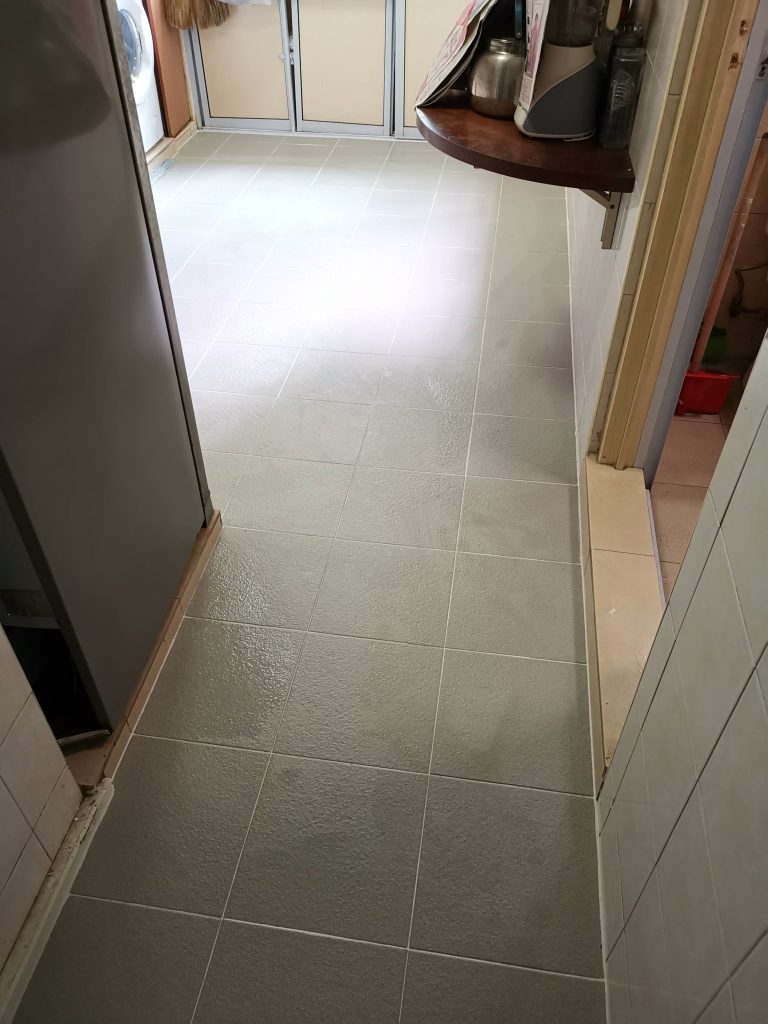
Overlay Kitchen Floor Tiles
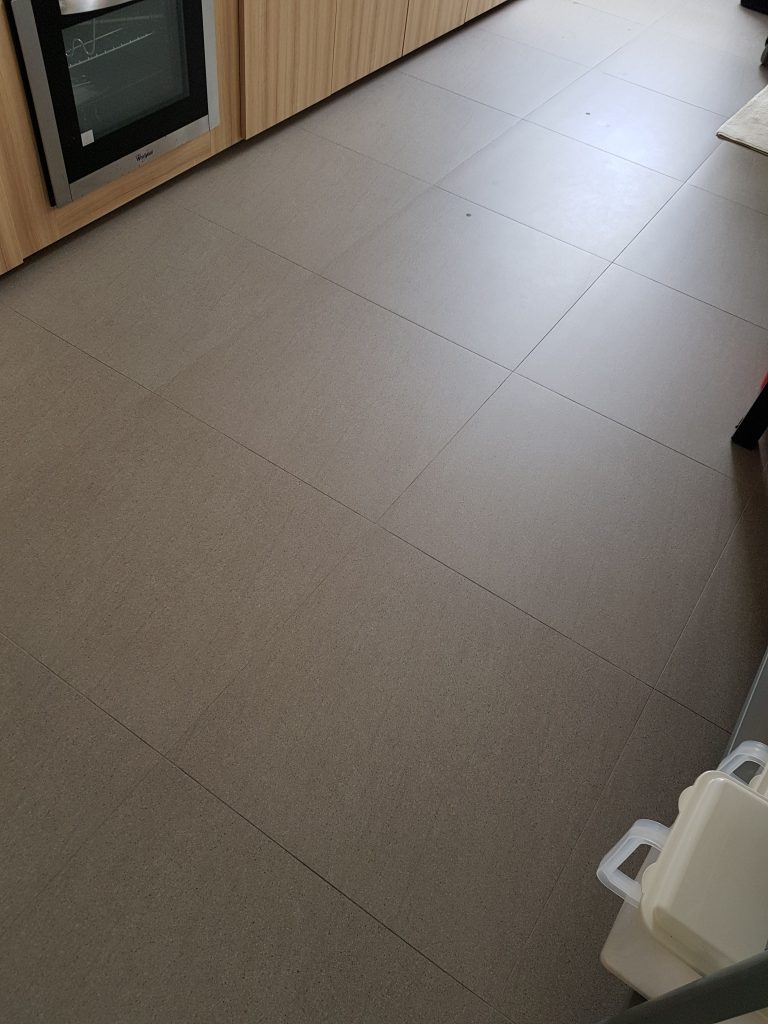
Kitchen floor tiles take a lot of abuse over the years.
Apart from everyday foot traffic, they are regularly exposed to water, grease, food spills, cleaning chemicals and frequent mopping.
Older kitchen floors can become stained or outdated, while individual tiles may become chipped or damaged.
For suitable existing floors, tile overlay can be an alternative to completely hacking out the existing tiles.
Instead of removing the entire floor finish, new tiles are installed over the existing tiles after the condition and suitability of the existing surface have been assessed.
Common Tile Sizes Used: 300mm x 300mm / 600mm x 300mm
When Does Kitchen Floor Tile Overlay Make Sense?
Overlay may be considered when:
- The existing tiles are generally sound
- The homeowner wants to refresh an older kitchen
- The homeowner wants a cost-effective method to refresh the kitchen
It is important to understand that overlaying is not simply a matter of sticking new tiles on top of old ones.
Loose, badly hollow or severely damaged tiles should be dealt with first. The existing floor also needs to be checked for level, drainage and other practical considerations.
For HDB homes, kitchen floors are treated as wet-area finishes and specific requirements apply to renovation works. HDB’s current guidelines include requirements concerning floor finishes and the materials used for kitchen floor renovation.
Why homeowners consider overlaying
One of the biggest advantages is that it can allow an otherwise usable kitchen to be refreshed without automatically removing everything.
If your kitchen cabinets and countertop are still in good condition, changing the floor finish may be enough to give the space a noticeably different appearance.
We provide kitchen floor tile overlay services in Singapore. Feel free to contact us with some photos for a no-obligation quote.
Estimated Turnaround: 2-3 Working Days
Overlay Kitchen Wall Tiles
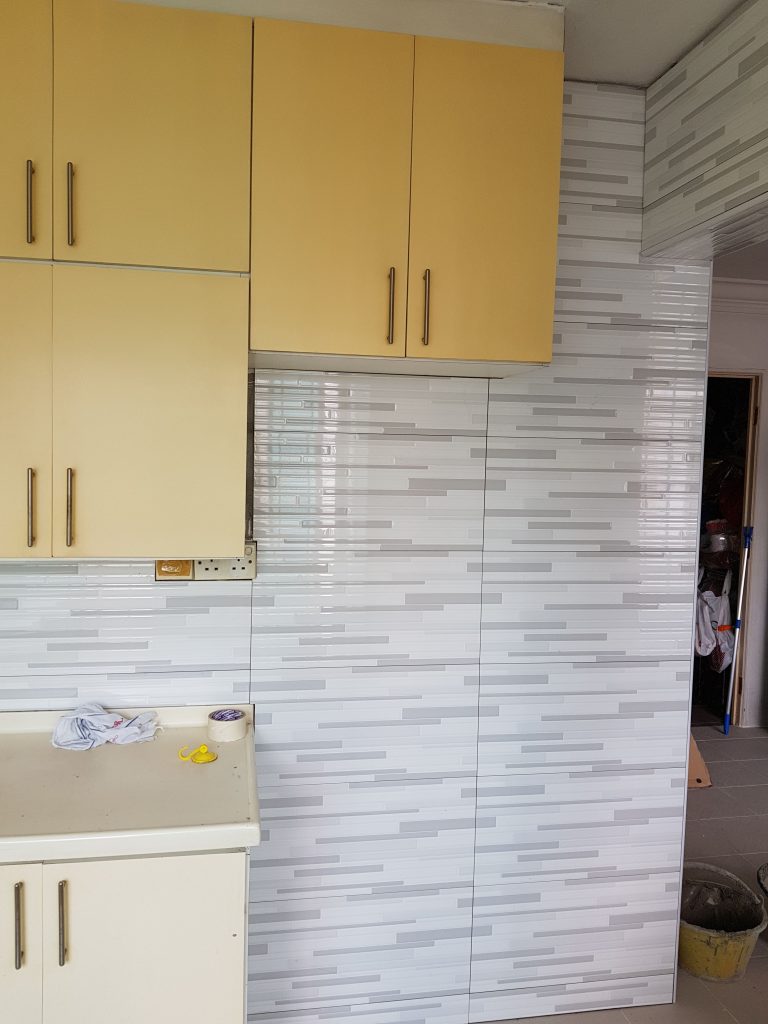
Kitchen walls around the sink and cooking area are constantly exposed to moisture, steam, oil and food splashes.
Older wall tiles can become stained, discoloured or simply look dated.
Grout can also accumulate dirt and become increasingly difficult to keep clean.
Where the existing wall surface is suitable, overlaying kitchen wall tiles can be considered as an alternative to removing all the existing tiles.
Common Tile Sizes Used: 600mm x 300mm
What should be checked before overlaying?
The condition of the existing tiles is particularly important.
If tiles are already loose, badly hollow or beginning to pop away from the wall, simply covering them with another layer may not address the underlying problem.
The wall surface, existing tiles, levels and surrounding fittings should be considered before deciding whether overlay is appropriate.
Updating an older kitchen
For homeowners who are happy with their existing cabinets but want a fresher appearance, new wall tiles can make a surprisingly large difference.
A change in tile colour, size or pattern can help modernise the kitchen without turning the project into a complete cabinet-and-countertop renovation.
For assistance with overlaying of wall tiles for kitchen, feel free to contact us with some photos for a no-obligation quote.
Estimated Turnaround Time: 3-5 Working Days.
Construct Sink & Stove Concrete Support with Homogeneous Tiles
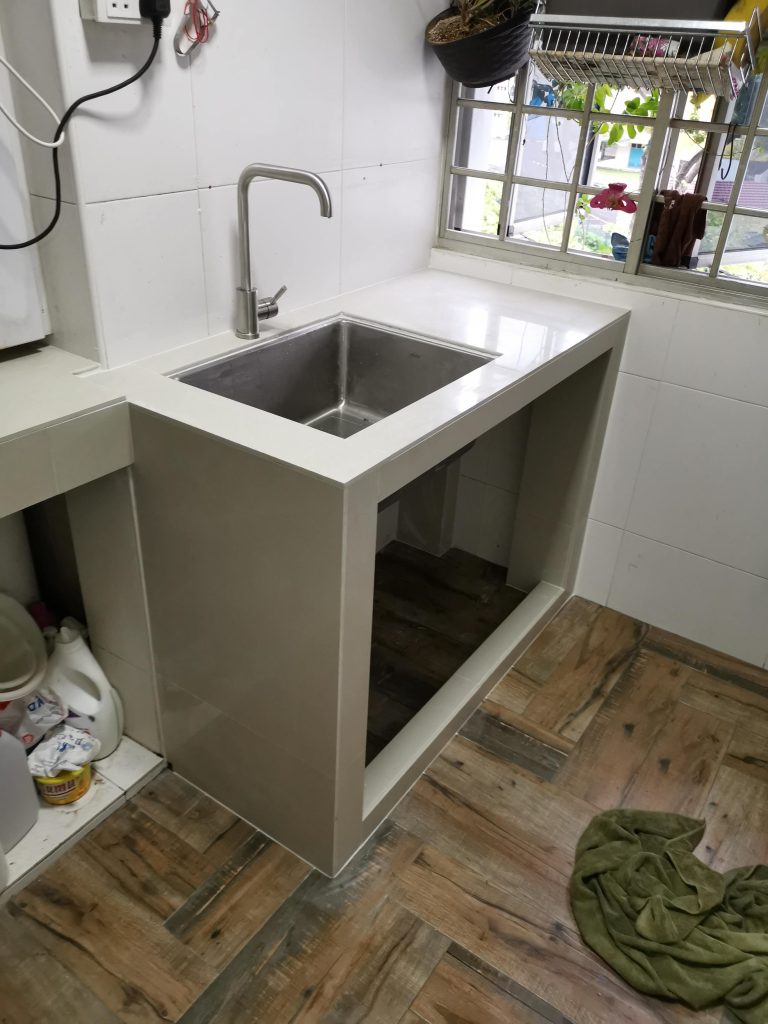
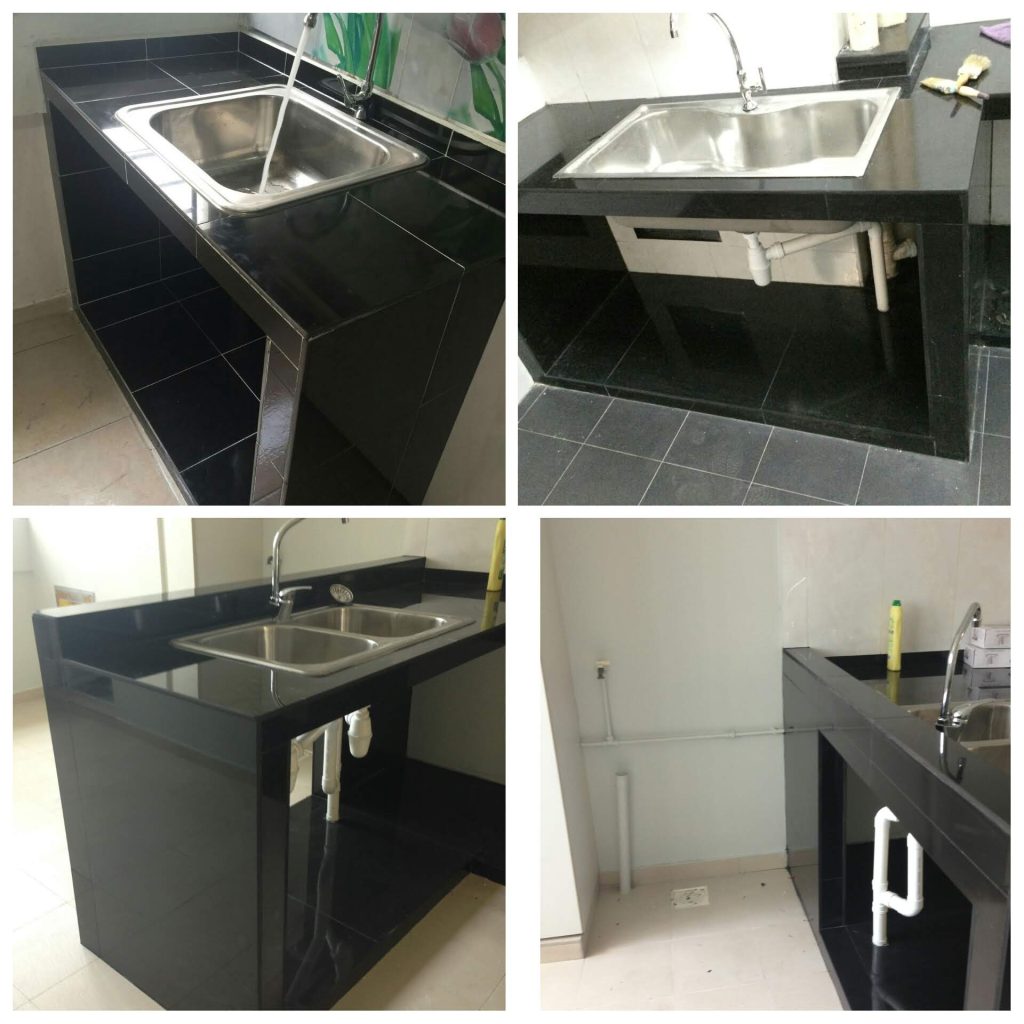
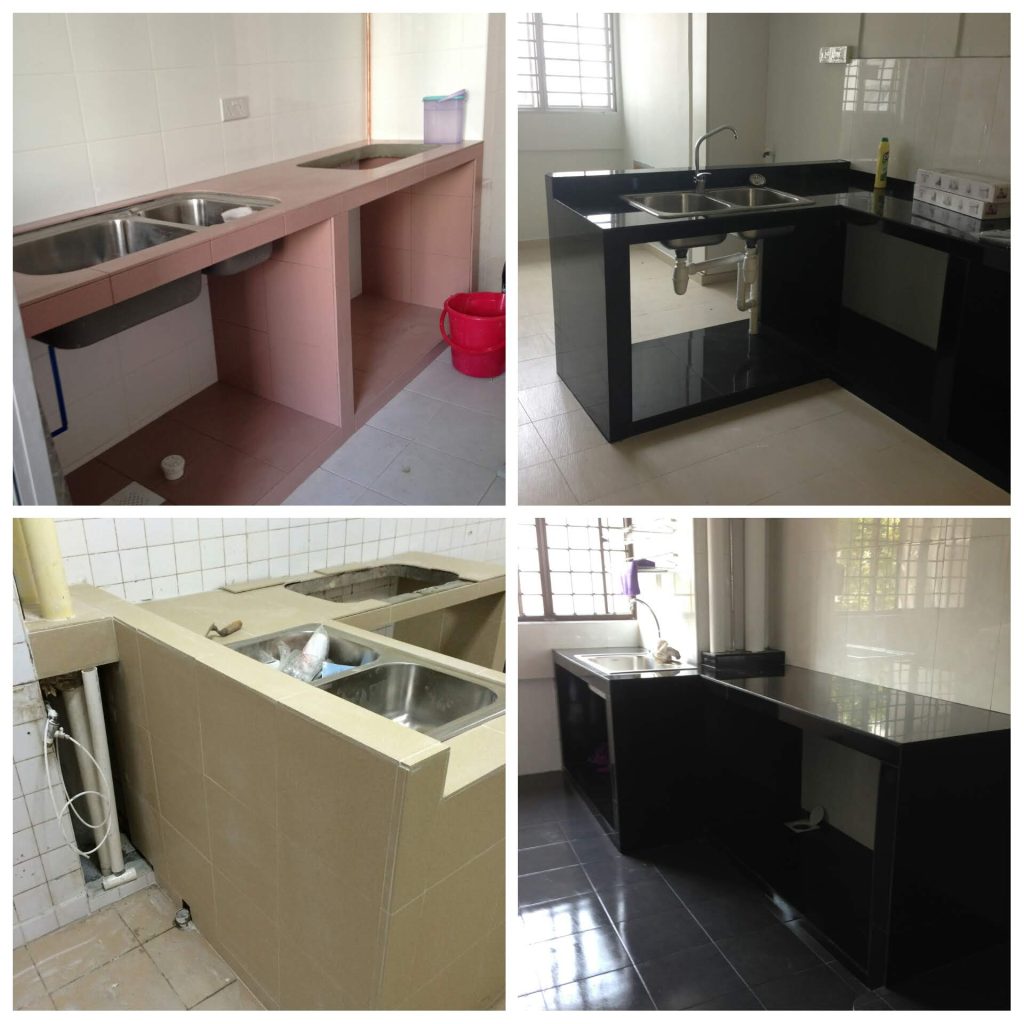
Concrete or mortar-based supports are commonly used in certain kitchen configurations to provide a solid base around the sink and stove area.
We can construct sink and stove concrete supports finished with homogeneous tiles, according to the requirements of the kitchen layout.
The work may involve preparing the base structure, forming the required dimensions and finishing the exposed surfaces with tiles.
Why use a concrete support?
A properly constructed support can provide a sturdy and practical base for the kitchen arrangement.
It can also be finished with homogeneous tiles, giving the support a clean appearance while making the surface relatively straightforward to maintain.
The traditional concrete sink & stove support generally holds up better under heavy use in years to come as compared to wood based sink & stove area.
Common Tile Sizes Used: 300mm x 300mm / 600mm x 300mm / 600mm x 600mm
Estimated Turnaround Time: 2-3 Working Days.
Kitchen Sink Alum Sliding / Swing Doors
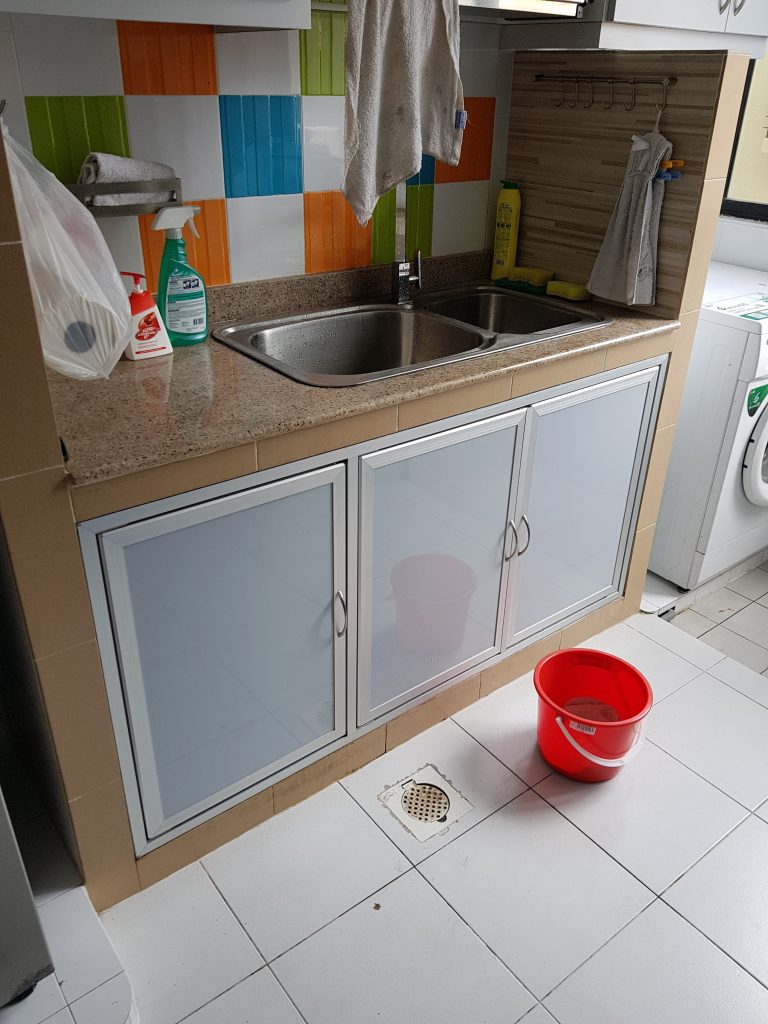
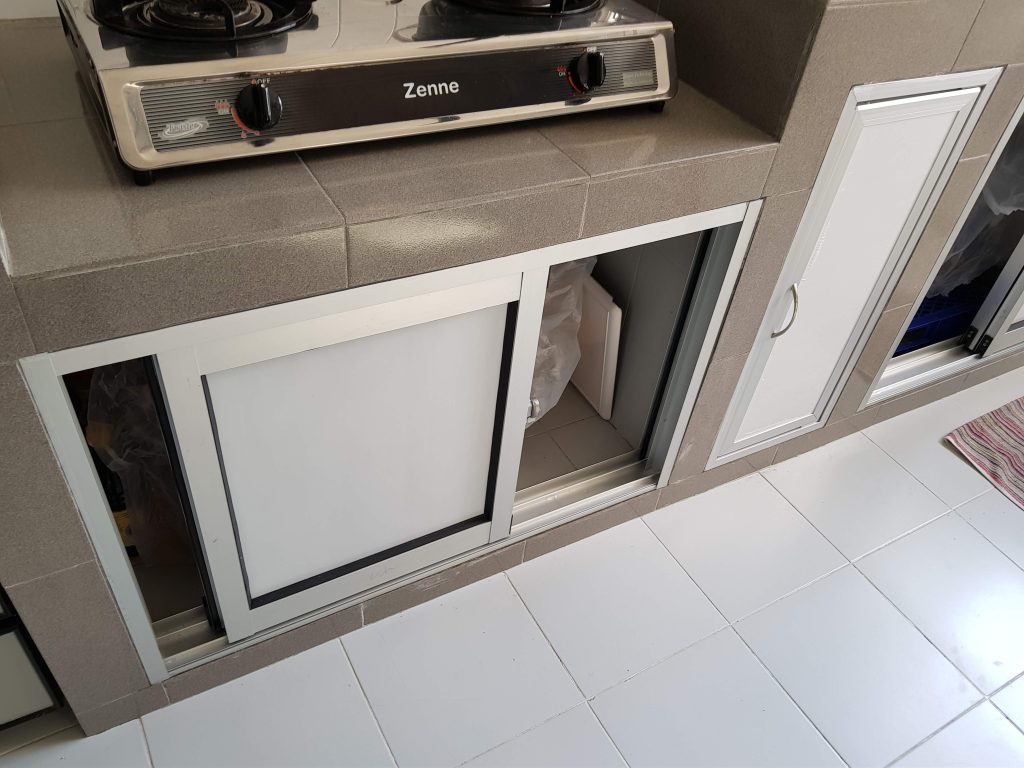
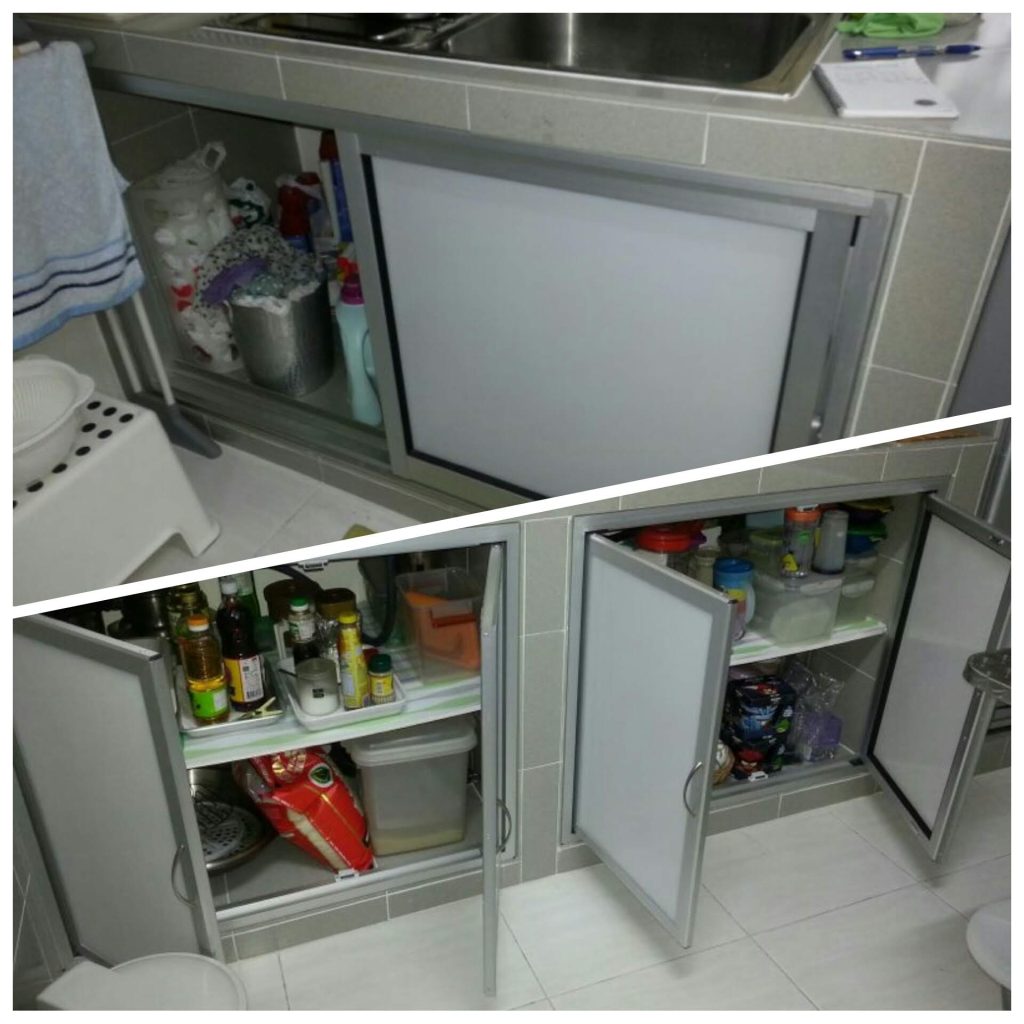
The space underneath a kitchen sink or stove support is often used for storage. However, leaving the area completely open can make the kitchen look unfinished and leaves plumbing, cleaning equipment and stored items exposed.
We provide installation of aluminium-framed sliding and swing doors for these areas.
These kitchen sink doors can be a practical option for kitchens where there is no conventional cabinet carcass or where a concrete or mortar support has been constructed.
Sliding doors
Sliding doors can be particularly useful where space in front of the cabinet is limited.
Because the doors move sideways rather than swinging outward, they can work well in tighter kitchen layouts.
Swing doors
Swing doors provide a more traditional cabinet-style arrangement and can offer easier access to the entire storage opening.
The choice between sliding and swing doors depends on the available space, opening size and how the area is intended to be used.
Aluminium framing is also well suited to areas around the kitchen sink where moisture is regularly present.
Construct Mortar Base for Kitchen Cabinets / Fridge / Washing Machine
The base underneath kitchen cabinets is an important part of the installation, although it is often overlooked.
A mortar base can be constructed underneath kitchen cabinets to provide a solid supporting base and raise the cabinet structure above the finished floor.
This can be particularly useful in kitchens where regular mopping and exposure to water are expected.
What is a kitchen cabinet mortar base used for?
Depending on the design, a mortar base can:
- Support the cabinet structure
- Raise cabinets above the finished floor
- Reduce direct contact between cabinets and the floor
- Provide a solid and stable base
- Create a suitable surface for tile finishing
The finished height needs to be planned together with the kitchen cabinets, countertop and appliances.
This is especially important when installing a new countertop or replacing an existing kitchen, because the wrong base height can affect the final working height of the countertop and the position of appliances.
What about fridge / washing machine base?
By constructing a morar base with tiles finish, your existing fridge / washing machine will be placed on top of it. This provides a stable base for the appliance and you can clean / wash the kitchen floor tiles directly without fear of wetting the fridge / washing machine.
Kitchen Sink, Tap, Inlet & Outlet Installation
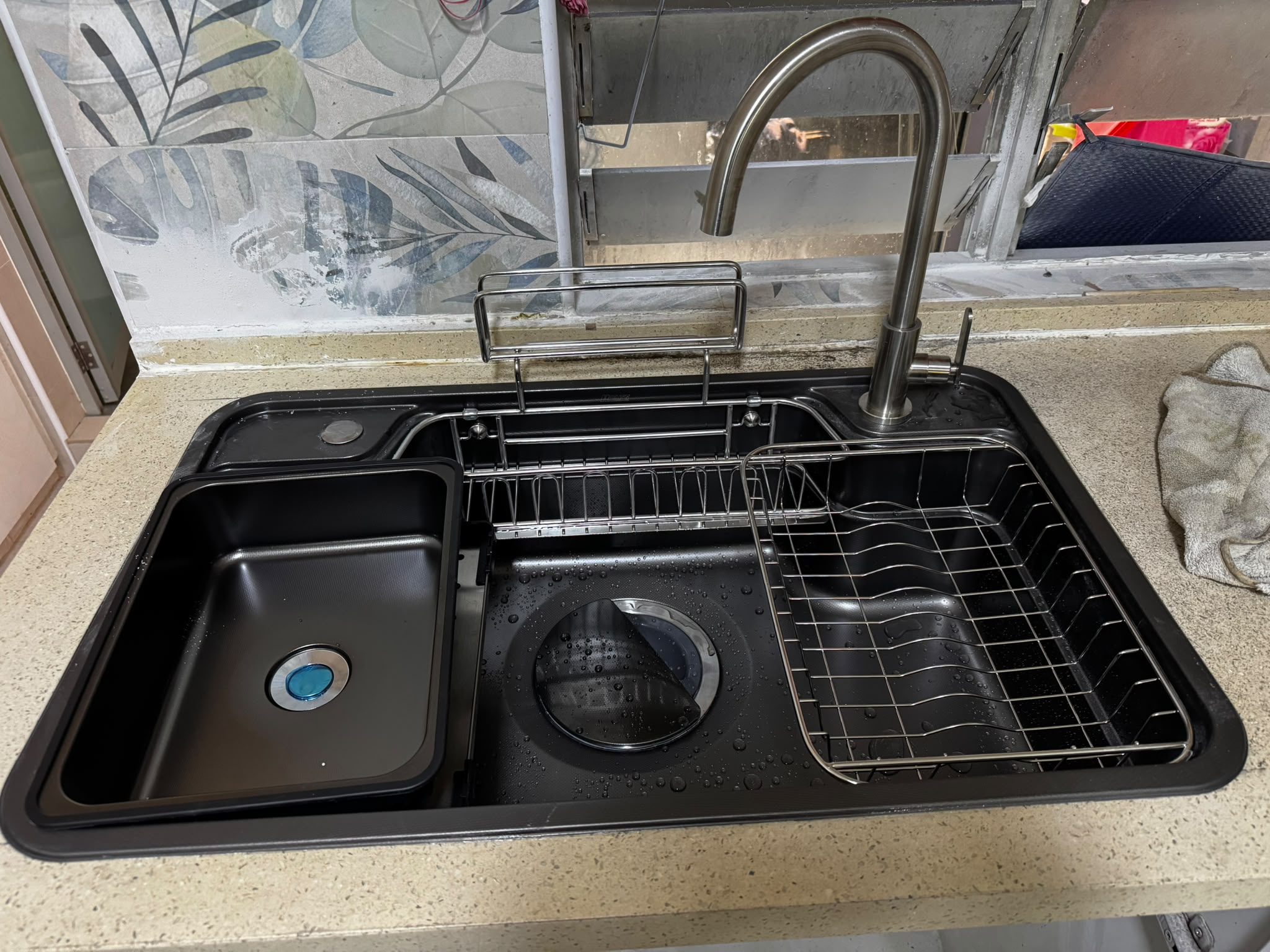
Installing a kitchen sink involves more than placing the sink into the countertop. The sink needs to be properly connected to the water supply and drainage system, while the tap, inlet hoses, waste outlet and bottle trap or drainage connection need to work together.
Our kitchen sink installation works can include:
- Kitchen sink installation
- Kitchen Sink tap installation
- Water inlet connection
- Flexible inlet hose connection
- Waste outlet installation
- Bottle trap connection where applicable
- Drainage connection
- Sealing around the sink
- Checking for leaks
- Testing drainage
A proper installation is important because the area underneath a kitchen sink can be difficult to notice once the cabinet is filled with household items.
A small leak from the inlet hose or waste connection can go unnoticed until the cabinet base, flooring or surrounding materials have already been affected.
Kitchen Sink Replacement on an Existing Kitchen Top
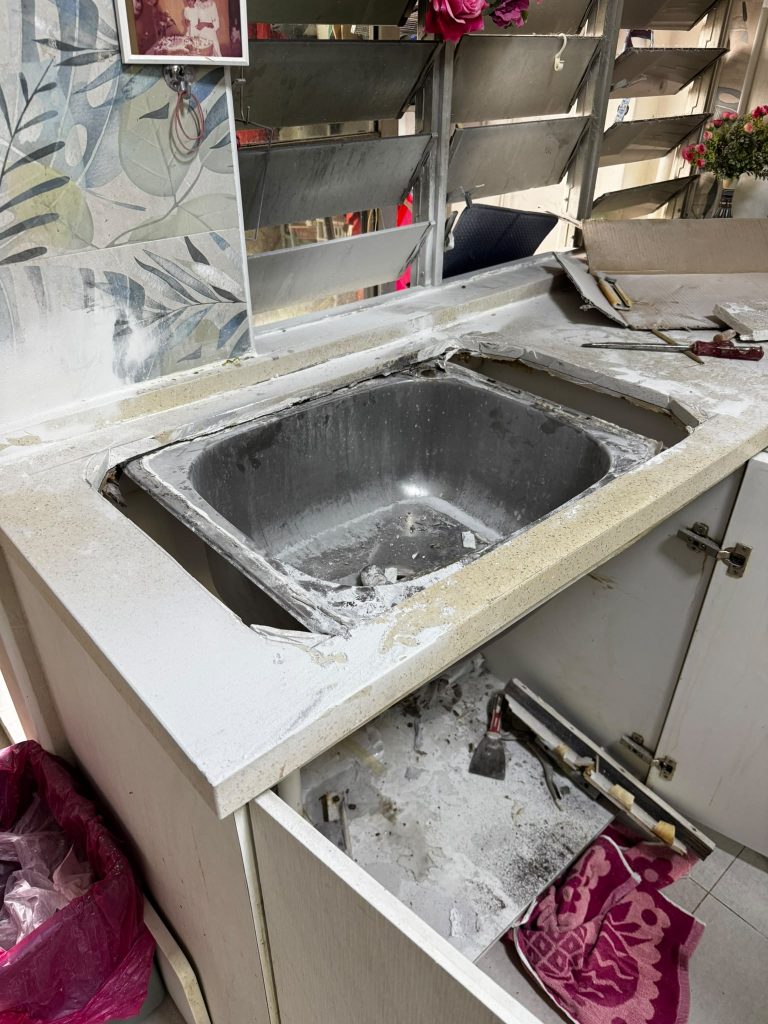
Replacing a kitchen sink does not necessarily mean replacing the entire countertop.
If the existing kitchen top is still in good condition, it may be possible to remove the old sink and install a new one while retaining the countertop.
However, this depends heavily on the existing sink opening and the dimensions of the replacement sink.
The existing kitchen top may need to be cut or altered
This is an important consideration when replacing a sink.
The new sink may be:
- Wider than the existing sink
- Narrower than the existing sink
- A different shape
- A different mounting style
- Positioned differently
- Designed for a different cut-out size
In such cases, the existing countertop may need to be cut, enlarged or otherwise altered to accommodate the replacement sink.
Whether this can be done depends on the material and condition of the countertop.
The existing sink should therefore be assessed before a replacement is selected.
Why replace a kitchen sink?
Common reasons include:
- Rust and corrosion
- Cracks or physical damage
- Persistent leakage
- Difficult-to-remove stains
- Damaged waste outlet
- Worn sink fittings
- Old or unsuitable sink design
- Homeowner wants a larger or deeper sink
If the countertop is otherwise still good, replacing only the sink can be a much more targeted approach than replacing the entire kitchen top.
Repair & Replace Hollow, Popping or Cracked Kitchen Tiles
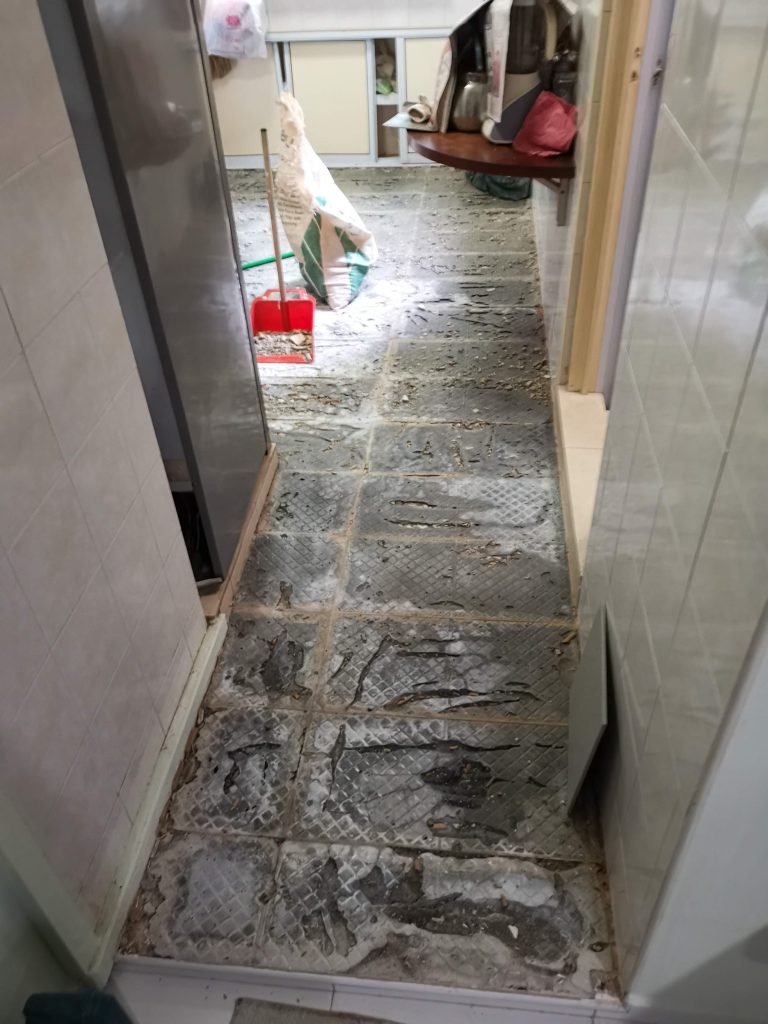
One of the more common problems found in older kitchens is damaged or loose tilework.
A tile may sound hollow when tapped, become loose around the edges or eventually start lifting away from the surface.
Some tiles may simply be cracked from impact, while others may become loose because of problems with the bond between the tile and underlying surface.
HDB’s home maintenance guidance notes that tiled floors can experience problems such as dislodged and cracked tiles, and identifies factors such as thermal movement and water absorption among possible causes of popping or dislodged tiles.
What does a hollow tile mean?
A hollow sound does not automatically mean that every tile needs to be removed.
However, if a tile is:
- Loose
- Moving underfoot
- Cracked
- Lifting at the edges
- Already popping
- Showing signs of deteriorating adhesion
then it should be inspected rather than ignored.
Repairing individual damaged tiles
If the problem is limited to a small area, individual tiles may be removed and replaced instead of hacking the entire kitchen floor or wall.
This can be a sensible option when most of the existing tiles remain in good condition.
The surrounding tiles should also be checked. If there is an underlying issue causing tiles to repeatedly become loose, replacing one tile without addressing the cause may only provide a temporary solution.
Estimated Turnaround Time: 1-2 Working Days.
Kitchen Cabinet Door & Hinge Replacement
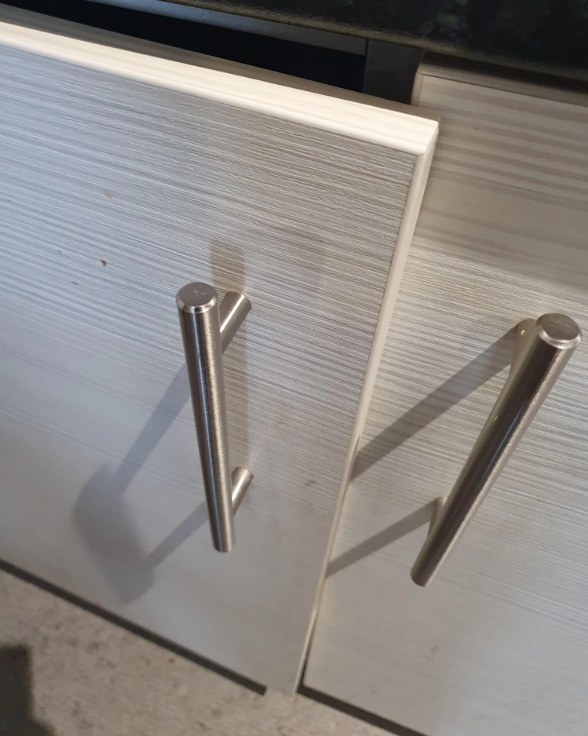
Kitchen cabinets can remain structurally usable even when the doors and hinges have seen better days.
Cabinet doors are opened and closed hundreds or thousands of times over the years.
Hinges can become loose, corroded or misaligned, while cabinet doors can become swollen, damaged or simply look dated.
Instead of replacing the entire cabinet, individual cabinet doors and hinges can sometimes be replaced.
Common cabinet problems
You may notice:
- Cabinet doors hanging unevenly
- Doors that no longer close properly
- Loose hinges
- Broken hinges
- Rusted or deteriorated hinges
- Cracked cabinet doors
- Damaged edges
- Doors that rub against neighbouring panels
Replacing the doors can also be an easy way to give an older kitchen a refreshed appearance without removing the entire cabinet structure.
The existing cabinet carcass and hinge positions should be checked before replacement so that the new doors can be fitted properly.
Stainless Steel Dish Holder Replacement
The dish holder inside a kitchen cabinet is exposed to water almost every day.
Even stainless steel components can eventually show signs of corrosion, staining or deterioration, particularly after years of constant use.
A damaged dish holder can also become difficult to clean and may no longer sit properly inside the cabinet.
Replacing the dish holder can be a relatively straightforward way to improve an existing kitchen without replacing the whole cabinet.
Common reasons for replacement include:
- Corrosion
- Rust staining
- Broken or bent components
- Loose mounting
- Difficult cleaning
- General ageing
- Change in cabinet storage requirements
Before replacement, the cabinet dimensions and existing mounting arrangement should be checked to ensure that the new dish holder fits correctly.
Washing Machine Tap, Inlet Hose & Outlet Hose Replacement
Washing machine connections are another part of the kitchen or household plumbing system that can easily be forgotten until a leak appears.
The inlet hose carries water into the washing machine, while the outlet hose carries used water away.
The washing machine tap and hose connections are subjected to water pressure and regular movement or vibration from the machine.
Over time, hoses can become brittle, connectors can deteriorate and taps can start leaking.
Signs that a washing machine hose or tap may need attention
Look out for:
- Water around the washing machine
- Dampness near the inlet connection
- Cracked or stiff hose material
- Rust or corrosion around the tap
- Loose hose connections
- Dripping tap
- Leaking outlet hose
- Water backing up during drainage
Replacing an ageing inlet or outlet hose can be worthwhile when there are visible signs of deterioration.
The washing machine tap should also be checked rather than assuming that the hose is always the source of a leak. We are able to provide plumbing services for toilets and kitchens such tap and hose replacement etc.
Repair or Renovate? You May Not Need to Replace the Whole Kitchen
One of the biggest mistakes homeowners can make when dealing with an ageing kitchen is assuming that everything has to go.
A kitchen can look tired because of one or two specific problems.
For example, the cabinets may still be perfectly usable but the doors are damaged. The countertop may still be in good condition while the sink has corroded. The floor may look outdated while the underlying kitchen structure remains sound.
In such cases, targeted renovation can make more sense.
You could potentially:
Refresh the floor
Overlay suitable existing kitchen floor tiles instead of completely replacing the flooring.
Refresh the walls
Overlay existing wall tiles where the substrate and tiles are suitable.
Replace the sink
Keep the existing countertop if it can accommodate the new sink, with cutting or alteration where appropriate.
Improve the cabinet area
Replace cabinet doors, hinges or dish holders instead of replacing the complete cabinet.
Improve the lower storage area
Install aluminium-framed sliding or swing doors below concrete or stove/sink supports.
Repair damaged tiles
Replace only the hollow, popping or cracked tiles that actually require attention.
Repair washing machine connections
Replace an old tap, inlet hose or outlet hose rather than waiting for a leak to become a bigger problem.
This type of work can be particularly useful for homeowners who are happy with the existing kitchen layout but want to improve its condition.
Kitchen Renovation & Servicing Works in Singapore
Our kitchen works are intended for homeowners who need anything from a small repair to a more substantial kitchen refresh.
Kitchen tiles
- Overlay kitchen floor tiles
- Overlay kitchen wall tiles
- Repair hollow tiles
- Replace popping tiles
- Replace cracked tiles
Kitchen structures
- Construct sink and stove concrete supports
- Finish supports with homogeneous tiles
- Construct mortar bases for kitchen cabinets
- Install aluminium-framed sliding doors
- Install aluminium-framed swing doors
Kitchen sinks & plumbing
- Kitchen sink installation
- Sink tap installation
- Water inlet connections
- Waste outlet connections
- Kitchen sink replacement
- Sink replacement on existing kitchen tops
- Existing countertop cutting or alteration where required
Kitchen cabinet components
- Kitchen cabinet door replacement
- Kitchen cabinet hinge replacement
- Stainless steel dish holder replacement
Washing machine plumbing
- Washing machine tap replacement
- Washing machine inlet hose replacement
- Washing machine outlet hose replacement
The condition of every kitchen is different. Sometimes a simple replacement is enough; sometimes a damaged area needs to be repaired before new finishes can be installed.
Our approach is to look at the existing kitchen and the specific problem rather than automatically treating every job as a full renovation.
For homeowners who are happy with their existing kitchen layout, this can provide a practical way to improve the parts that actually need attention while keeping usable components wherever possible.