
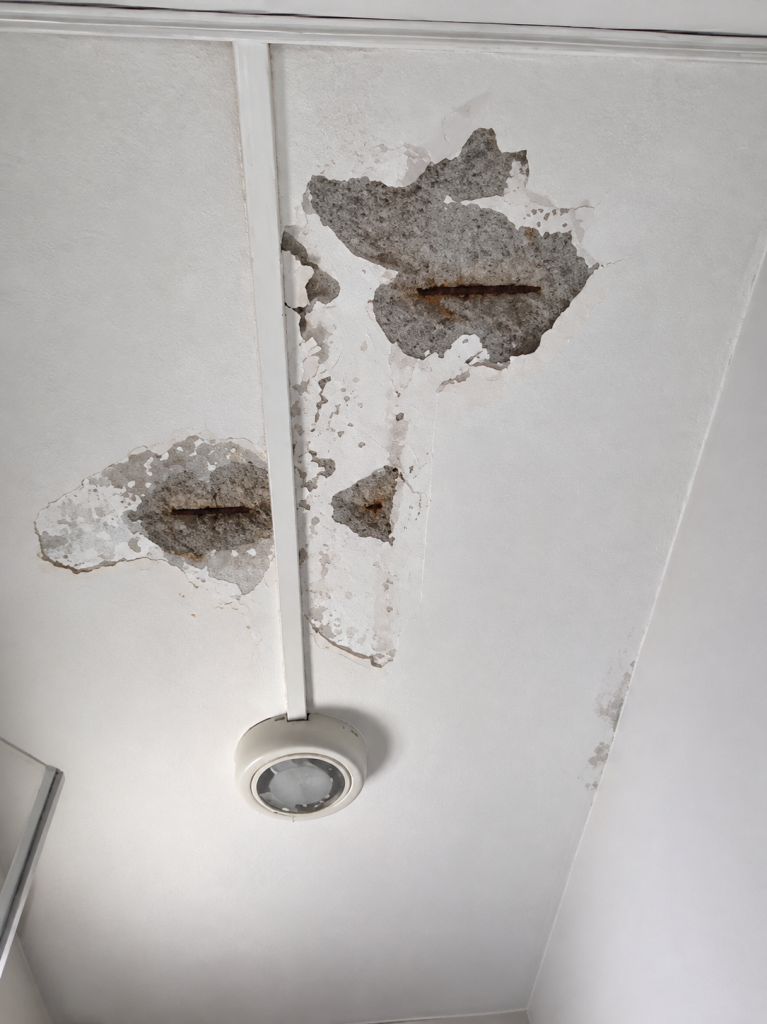
If you notice cracks, bulging concrete, rust stains or pieces of concrete falling from your HDB ceiling, you may be dealing with spalling concrete.
Spalling concrete is a common maintenance problem in older HDB flats, particularly in areas exposed to moisture such as toilets, bathrooms and kitchens. It should not simply be covered with paint or skimmed over, because the problem usually starts deeper inside the concrete where the steel reinforcement has begun to corrode.
The good news is that most localised spalling concrete can be repaired without replacing the entire ceiling. The damaged concrete is carefully removed, the exposed steel reinforcement is cleaned and protected, and the affected area is rebuilt with suitable repair mortar.
If you have noticed spalling concrete in your HDB flat, early repair can prevent the affected area from becoming larger and reduce the risk of loose concrete falling.
What Is Spalling Concrete?
Spalling concrete occurs when the concrete surrounding the steel reinforcement inside a reinforced concrete slab begins to deteriorate.
Over time, carbon dioxide and moisture can penetrate the concrete. This can cause the embedded steel reinforcement bars to corrode. As the steel rusts, it expands and creates pressure against the surrounding concrete.
Eventually, the concrete cover can crack, bulge and become loose.
HDB describes carbonation as a major cause of spalling concrete, with the problem commonly seen in damp areas such as toilets and kitchens.
You may first notice:
- Small cracks or hairline cracks in the ceiling
- Brown or reddish rust stains
- Concrete that appears swollen or bulged
- Hollow-sounding concrete when tapped
- Crumbling or flaking concrete
- Pieces of concrete falling from the ceiling
- Exposed steel reinforcement bars
Once concrete has started to loosen, the affected area can continue to spread if it is left untreated.
Where Is Spalling Concrete Commonly Found in HDB Flats?
Spalling concrete can occur anywhere there is reinforced concrete, but it is particularly common in areas where the concrete is regularly exposed to moisture.
Common locations include:
HDB Toilet and Bathroom Ceilings
Toilet ceilings are one of the more common places to find spalling concrete because of the humid environment.
Repeated exposure to moisture can contribute to corrosion of the steel reinforcement. HDB has also introduced enhanced corrosion-resistant repair methods for toilet spalling concrete under its Home Improvement Programme.
Kitchen Ceilings
Kitchens can also experience high humidity and moisture, particularly around cooking areas.
Other Ceiling Areas
Spalling concrete can also occur in living rooms, bedrooms, service yards and other parts of the flat. Moisture is not necessarily the only factor; age and the natural deterioration of reinforced concrete can also contribute to the problem.
Why Does Spalling Concrete Happen?
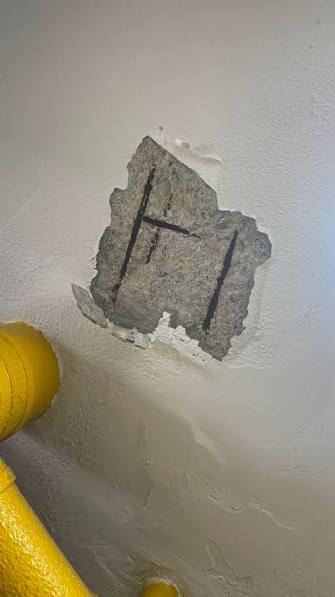
There is no single cause in every HDB flat.
One of the main causes is corrosion of the steel reinforcement inside the concrete.
As the steel corrodes, the rust occupies more volume than the original steel. This expansion creates internal pressure in the concrete and can eventually cause the concrete cover to crack and break away.
Other factors that can contribute include:
- Ageing concrete
- Carbonation
- High humidity
- Moisture penetration
- Water leaks
- Cracks or holes that allow moisture into the concrete
- Poor ventilation in damp areas
This is why simply repairing the visible crack may not solve the underlying problem.
Is Spalling Concrete Dangerous?
It can be.
The immediate concern is loose concrete falling from the ceiling. Even a relatively small piece can cause injury if it falls unexpectedly.
More importantly, spalling concrete is an indication that deterioration is occurring around the reinforcement. The extent of the problem cannot always be judged from the size of the visible patch.
A small crack or bulge on the surface may have loose or deteriorated concrete surrounding it.
For this reason, spalling concrete should be inspected and repaired rather than simply painted over.
If a large section of your ceiling is affected, or concrete is already falling, it is advisable to engage a contractor promptly. HDB also recommends engaging a contractor where the affected area is large.
How Is Spalling Concrete Repaired?
A proper spalling concrete repair is more than just filling a hole and painting it.
The damaged concrete needs to be removed until sound concrete is reached, while the exposed reinforcement is cleaned and protected before the area is patched.
A typical repair process is as follows.
1. Inspect the Affected Area
The first step is to inspect the ceiling and identify the extent of the spalling.
The visible damaged area is checked for:
- Loose concrete
- Cracks
- Bulging sections
- Hollow or weak concrete
- Rust stains
- Exposed reinforcement bars
The repair area may be larger than the obvious crack or damaged patch because loose concrete can extend beyond what is immediately visible.
2. Knock Out Loose and Damaged Concrete
The loose concrete is carefully knocked out and removed from the affected area.
This is an important part of the repair.
Simply plastering over loose concrete does not provide a reliable repair because the underlying material can continue to detach.
The damaged concrete is removed until the remaining concrete is sufficiently sound and stable.
Care is taken around the exposed reinforcement so that the steel bar is not unnecessarily damaged during hacking.
For small areas, a hammer and chisel may be sufficient. Larger or more difficult areas may require suitable tools and additional precautions.
3. Expose the Reinforcement Bar
Once the loose concrete has been removed, any exposed steel reinforcement is inspected.
Where necessary, additional concrete around the steel is removed to provide access for proper cleaning and treatment.
The objective is not simply to make the surface look clean. The rusted reinforcement needs to be properly treated before the concrete repair is rebuilt.
4. Clean the Rust From the Steel Bar
The exposed reinforcement is scraped and cleaned to remove loose rust and corrosion products.
A wire brush or suitable mechanical cleaning method can be used depending on the condition of the steel.
HDB’s own repair guidance specifies cleaning the exposed steel reinforcement and using a wire brush to remove rust.
This step is important because applying repair mortar directly over heavily rusted steel without proper preparation may result in the corrosion continuing underneath the repair.
5. Apply Anti-Rust / Anti-Corrosion Protection
After cleaning, an appropriate anti-rust or anti-corrosion coating is applied to the exposed reinforcement.
This provides protection to the steel before the concrete repair material is applied.
HDB’s published repair method calls for two coats of anti-rust paint for localised spalling concrete repairs. Its enhanced Corrosion Resistant Repair method also uses an anti-corrosion coating over exposed reinforcement to reduce the likelihood of further corrosion.
The product should be applied according to the manufacturer’s instructions, including the required drying or curing time.
6. Apply Bonding Agent
A suitable bonding agent is applied to the prepared concrete surface where required.
The bonding agent helps the repair material adhere properly to the existing concrete.
Proper surface preparation is important at this stage. Dust, loose particles and other contaminants should be removed before the repair material is applied.
7. Patch the Area With Repair Mortar
The hacked-out section is then rebuilt using a suitable polymer-modified cement repair mortar.
The repair material is pressed into the affected area and built up to restore the surface.
The repair should be carried out properly rather than simply filling the outermost surface. The objective is to provide good contact around the treated reinforcement and properly restore the damaged concrete section.
HDB specifically recommends polymer-modified cement mortar for patching localised spalling concrete repairs.
8. Allow the Repair to Cure
The repair material needs sufficient time to set and cure according to the manufacturer’s requirements.
Rushing this stage can affect the quality of the repair.
9. Smooth and Prepare the Surface
Once the repair has sufficiently cured, the repaired area can be finished to achieve a reasonably smooth surface.
Any necessary skim coating or surface preparation can then be carried out before painting.
10. Repaint the Ceiling
Finally, the repaired section is painted to match the surrounding ceiling as closely as practical.
Painting is not merely for appearance. Maintaining the ceiling finish and sealing cracks or holes can also help reduce the penetration of moisture and carbon dioxide into the concrete. HDB recommends regular ceiling painting and prompt sealing of cracks and unused holes as part of spalling concrete prevention.
Can You Repair Spalling Concrete Yourself?
For a very small and easily accessible area, HDB provides guidance for homeowners to carry out minor spalling concrete repairs themselves.
However, larger patches or areas with significant exposed reinforcement are better handled by an experienced contractor.
Ceiling repair also involves working overhead, usually from a ladder, while removing potentially loose concrete. There is therefore a safety risk if the affected area is unstable or difficult to access.
If the concrete is extensively cracked, badly rusted or falling from a large area, professional assessment is recommended.
Does Spalling Concrete Mean the HDB Building Is Structurally Unsafe?
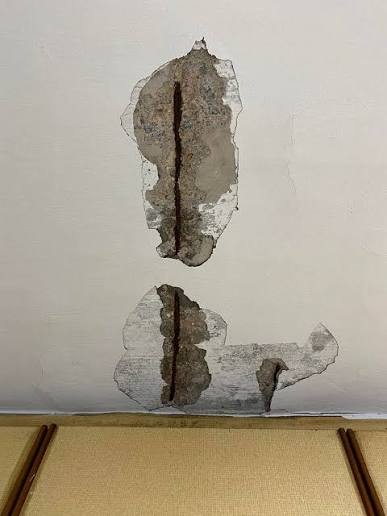
Not necessarily. Spalling concrete is relatively common in ageing reinforced concrete buildings and does not automatically mean that the entire building has a structural problem.
In many cases, the problem is localised to the concrete cover around corroded reinforcement and can be repaired.
However, the condition should not be ignored.
The appropriate repair depends on the extent of concrete deterioration and the condition of the reinforcement underneath.
If there is extensive damage, unusually large cracks, significant exposed reinforcement or other signs of structural deterioration, further assessment may be necessary.
Will Spalling Concrete Come Back After Repair?
A properly repaired area can remain in good condition for many years, but there is no guarantee that spalling will never recur.
The underlying cause of reinforcement corrosion is important.
For example, a toilet ceiling that remains exposed to high humidity and moisture may continue to be more susceptible to deterioration.
This is why prevention and maintenance are also important after the repair.
HDB recommends:
- Keeping toilets and kitchens well ventilated
- Repainting ceilings regularly
- Sealing cracks and holes
- Sealing unused ceiling holes left after removing fixtures
- Addressing moisture and water leakage problems promptly
If there is an active water leak affecting the ceiling, the leak should also be addressed rather than simply repairing the visible spalling.
Spalling Concrete vs Ceiling Leak
Spalling concrete and ceiling leaks can sometimes appear together, but they are not the same problem.
Spalling concrete generally involves deterioration of the concrete and corrosion of reinforcement.
A ceiling leak involves water entering the flat through the floor slab or another source.
In an HDB toilet, for example, a persistent water leak can contribute to damp conditions and may worsen deterioration.
If you have both a ceiling leak and spalling concrete, it is important to identify and address the source of the water rather than repairing only the damaged concrete surface.
HDB recommends different repair methods for ceiling leaks depending on the source and location of the leak.
How Much Does Spalling Concrete Repair Cost in Singapore?
The cost depends mainly on the size and condition of the affected area.
A small isolated patch will generally require less work than a ceiling with multiple areas of spalling.
The price can also vary depending on:
- Size of the affected area
- Number of repair locations
- Condition of the reinforcement bars
- Amount of concrete hacking required
- Height and accessibility of the ceiling
- Whether repainting is included
- Whether additional waterproofing or leak repair is required
- Whether the entire ceiling requires additional anti-corrosion treatment
It is therefore better to assess the actual condition of the ceiling before quoting for repair work.
Be cautious of extremely low-cost quotes where the proposed solution is simply to plaster over the damaged section. A proper repair should address the loose concrete and exposed reinforcement rather than hiding the visible damage.
HDB Spalling Concrete Repair During HIP
Some older HDB flats may be selected for the Home Improvement Programme (HIP).
HIP includes works to address common maintenance issues such as spalling concrete. HDB has also enhanced its approach to spalling concrete repairs in toilets, including a corrosion-resistant repair method designed to reduce the likelihood of recurrence at the same location.
However, homeowners should not assume that every spalling concrete problem will automatically be repaired under HIP.
If your flat currently has spalling concrete and you are concerned about falling concrete or worsening damage, it is better to address the problem rather than wait for a future upgrading programme.
How to Prevent Spalling Concrete
You cannot completely eliminate the possibility of spalling concrete in an ageing HDB flat, but regular maintenance can help.
Keep Damp Areas Well Ventilated
Bathrooms and kitchens should be ventilated after use to reduce prolonged humidity.
Repair Water Leaks Promptly
Do not allow water leakage to continue around ceilings, toilets or pipes.
Seal Cracks and Holes
Cracks and unused holes in the ceiling should be sealed to reduce the entry of moisture and carbon dioxide.
Maintain the Ceiling Paint
A properly maintained paint coating provides an additional layer of protection to the concrete surface.
Inspect Older Ceilings Regularly
Look for new cracks, rust stains, bulging areas or concrete that appears loose.
Early detection usually makes the repair more straightforward.
Looking for Spalling Concrete Repair in Singapore?
If your HDB ceiling has spalling concrete, loose concrete, rust stains or exposed reinforcement, it is better to repair the affected area before the damage becomes more extensive.
Our spalling concrete repair service can include:
- Inspection of the affected area
- Hacking and removal of loose concrete
- Cleaning of exposed reinforcement
- Rust removal
- Anti-rust / anti-corrosion treatment
- Bonding agent application
- Polymer-modified repair mortar
- Surface finishing
- Ceiling repainting
The exact repair method depends on the condition of the concrete and reinforcement at the time of inspection.
Contact us to arrange an assessment of your HDB spalling concrete problem and discuss the appropriate repair solution.
Send us a Whatsapp Message with a photo of the affected area for a quote here.
Frequently Asked Questions
What causes spalling concrete in HDB flats?
Spalling concrete is commonly associated with the corrosion of steel reinforcement embedded within reinforced concrete. Carbonation, moisture and the ageing of concrete can contribute to the corrosion process.
Can spalling concrete be repaired?
Yes. Localised spalling can usually be repaired by removing the damaged concrete, cleaning and treating the exposed reinforcement, applying a bonding agent and rebuilding the area with suitable repair mortar.
Should I just plaster over spalling concrete?
No. Plastering or painting over loose concrete does not address the underlying problem. The loose and damaged concrete should first be removed and the exposed reinforcement properly treated.
Is spalling concrete common in HDB toilets?
Yes. HDB identifies damp areas such as toilets and kitchens as common locations for spalling concrete.
Can I repair a small area of spalling concrete myself?
HDB provides guidance for homeowners to repair small affected areas themselves. However, larger areas, extensive exposed reinforcement or difficult-to-access ceilings should be handled by a contractor.
How long does spalling concrete repair take?
Small localised repairs can often be completed relatively quickly, but the actual duration depends on the size of the affected area, the condition of the reinforcement and the curing requirements of the repair materials.
Will spalling concrete happen again after repair?
It can recur, particularly where the underlying conditions that contribute to reinforcement corrosion remain. Good ventilation, proper maintenance and prompt repair of cracks or water leaks can help reduce the risk.
Does spalling concrete mean my HDB flat is unsafe?
Not necessarily. Spalling concrete is a common maintenance issue in older reinforced concrete structures. However, it should not be ignored because loose concrete can fall and the underlying reinforcement may be corroding.
Who is responsible for repairing spalling concrete in an HDB flat?
For spalling concrete within your flat, the homeowner is generally responsible for arranging the repair. HDB states that flat owners are responsible for preventing and repairing spalling concrete within their homes.